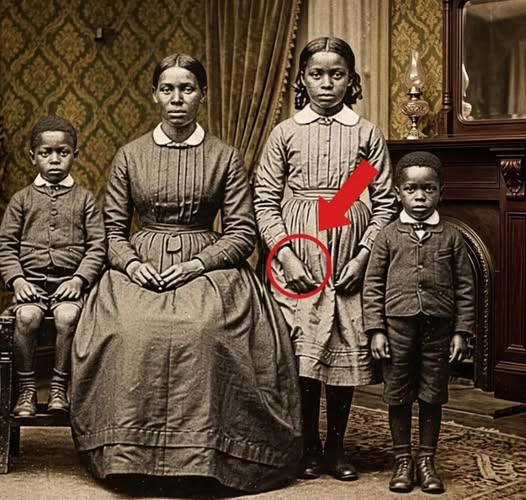
It was just a simple family photo from 1872, but look closely at the sister’s hand
Old photographs carry a unique significance. They freeze a moment in time, allowing later generations to glimpse the lives of people from the past.
They are more than images; they act as subtle historical records. Through them, we can observe clothing, posture, family dynamics, and the values of a particular era.
When studied closely, such photographs often communicate stories that words alone cannot fully capture. Small details can reveal deeper meanings.
One image from 1872 has drawn lasting interest. At first glance, it appears to be a standard 19th-century family portrait.
A mother sits formally in a chair with a composed expression, while two young boys stand beside her in neat attire. An older daughter stands nearby, completing the balanced arrangement.
Looking more carefully, viewers notice something unusual about the girl’s right hand. Her fingers appear shorter or differently shaped, suggesting a congenital condition.
Rather than hiding this difference, the family chose to present her openly. This choice reflects acceptance and offers a lasting reminder that even simple portraits can hold powerful stories of love, identity, and dignity.