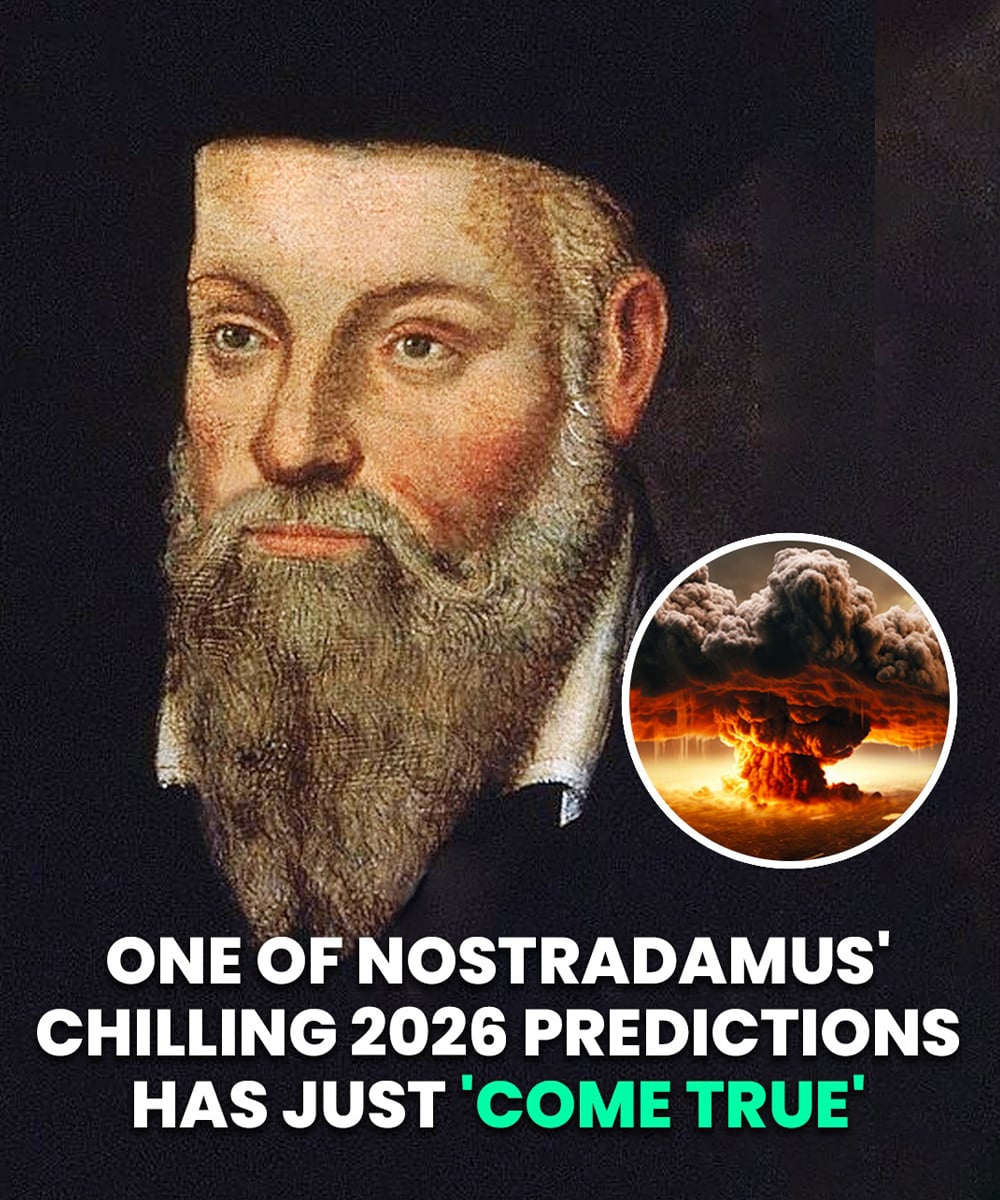
One Of Nostradamus’ 2026 Predictions Has Just ‘Come True’
From Iran’s crimson floodwaters to Europe’s battered coastlines, the world confronts scenes that feel eerily symbolic. Whether one believes in prophecy or not, these images carry an unsettling weight that transcends scientific explanation.
On Hormuz Island, mineral-rich soil mixed with torrential rain created blood-red streams cascading through valleys. Scientists calmly explained the phenomenon as natural chemistry, yet social media rapidly framed these waters as omens of darker things to come.
In the United Kingdom, surging seas tore into Devon and Cornwall with destructive force. Collapsing sea walls and rewritten coastlines transformed landscapes that had stood unchanged for generations. The ocean claimed what centuries had built.
These events are rooted in measurable forces: rising temperatures, shifting weather systems, and climate risk’s hard arithmetic. Researchers documented these patterns in reports like the Natural Catastrophe Review 2026, offering data-driven explanations for each disaster.
Yet the pull of Nostradamus endures through every crisis. His verses offer something science cannot provide: a story. Where researchers present probabilities, prophecy supplies meaning and narrative structure to random catastrophe.
In this age of mounting anxiety, people instinctively reach for patterns. They seek warnings hidden in events, purpose embedded in destruction. Whether quatrains represent genuine prophecy or collective projection matters less than their persistence.
The resurgence of interest in ancient predictions reveals more about current fears than future certainties. We project onto the past our present dread, finding in old verses confirmation of anxieties already felt. The symbols we see reflected in flood and storm are ultimately our own.