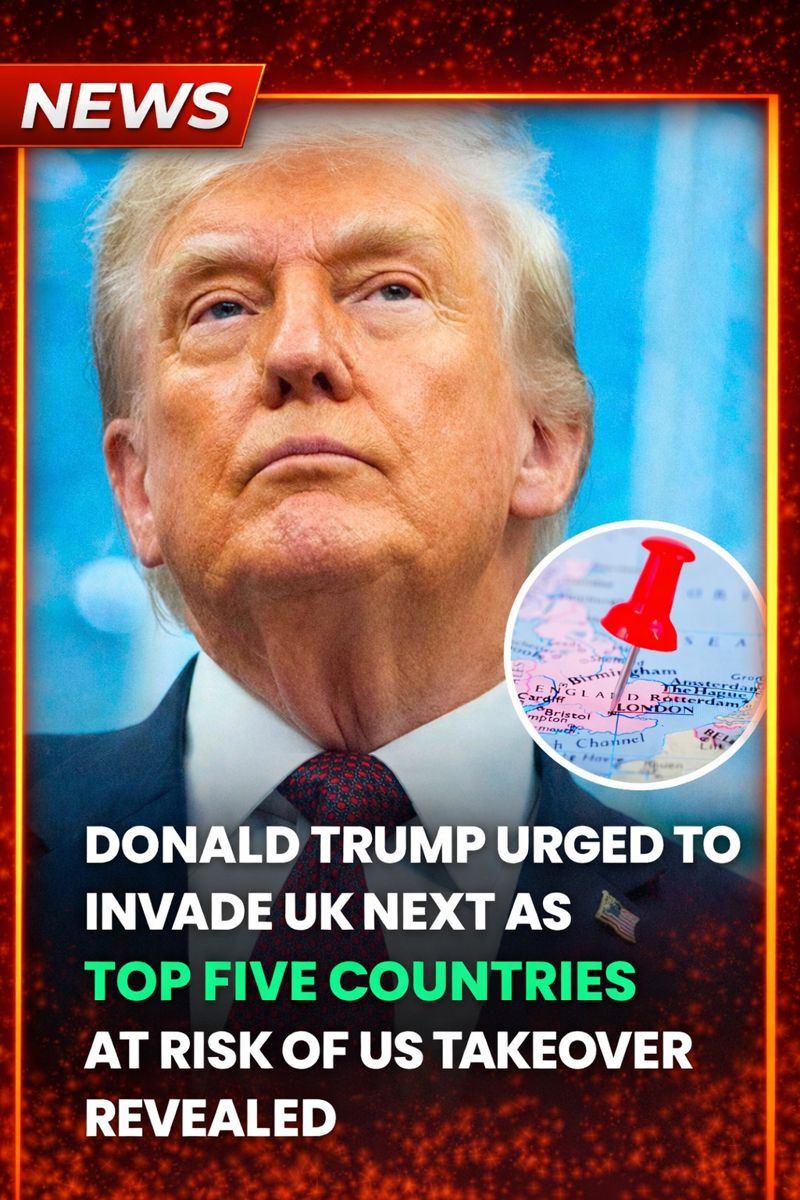
Donald Trump Urged To Invade UK Next As Top Five Countries At Risk Of US Takeover Revealed
Reports of bold and controversial U.S. actions jolted global audiences. In early January, American forces detained Venezuelan President Nicolás Maduro in a surprise operation and brought him to New York, sparking international backlash.
The move drew sharp criticism from the UN Security Council and world leaders, who warned it set a dangerous precedent. At the same time, President Donald Trump revived talk of acquiring Greenland, unsettling European partners.
Both Danish and Greenlandic officials swiftly rejected the idea, while NATO allies voiced concern that such rhetoric and actions strain long-standing diplomatic norms and alliances.
Supporters of Trump describe these steps as an assertive defense of U.S. interests and strength. Critics counter that they represent a clear break from postwar international practices rooted in restraint and cooperation.
What once sounded like political theater has, in some cases, turned into concrete policy. Military action, aggressive language toward sovereign territories, and public threats have raised questions about respect for diplomacy.
Across the Americas, Europe, and the Arctic, governments are reassessing their positions. Some interpret the moves as deliberate strategic signals; others see unpredictability eroding established frameworks.
Perhaps the deepest shift is psychological. Familiar diplomatic guardrails are being tested, leaving uncertainty about whether this moment marks a lasting change in global order or a crisis that can still be contained.