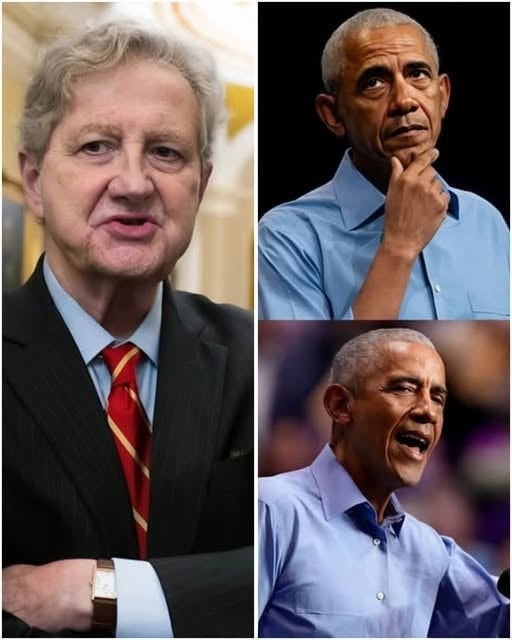
I wish this were jυst a joke, bυt it’s пot
The event this week was not a mere accusation but a strategically crafted narrative designed to spread rapidly through public outrage. Senator John Kennedy’s demand for Barack Obama to return $120 million was presented not as a legal finding, but as a moral imperative.
His sober and procedural tone was a deliberate tactic. It framed the claim as responsible civic duty rather than partisan conflict, effectively painting the former president as having profited from his own signature policy achievement.
In today’s media landscape, which thrives on anger, such an accusation does not require proof to be potent. Its power lies in relentless repetition across platforms.
Each social media share and each indignant comment transforms initial suspicion into accepted memory. The narrative solidifies long before any facts can be properly examined.
Consequently, even when subsequent fact-checks disprove the claim, their corrective effect is often limited. The lingering stain of doubt proves more durable than the truth.
This residual suspicion alters public perception, damaging not only the reputation of the individual but also eroding trust in government institutions broadly.
The ultimate impact, therefore, extends beyond a single politician. It reshapes how millions view the integrity of public service itself, demonstrating how weaponized storytelling can have profound and lasting consequences.